Hy.Summit.Rhein.Ruhr 2025: A Reality Check for the Hydrogen Rollout
All press releases
"Only a decarbonized steel industry can ensure Europe's hydrogen ramp-up and, with it, our industrial resilience."
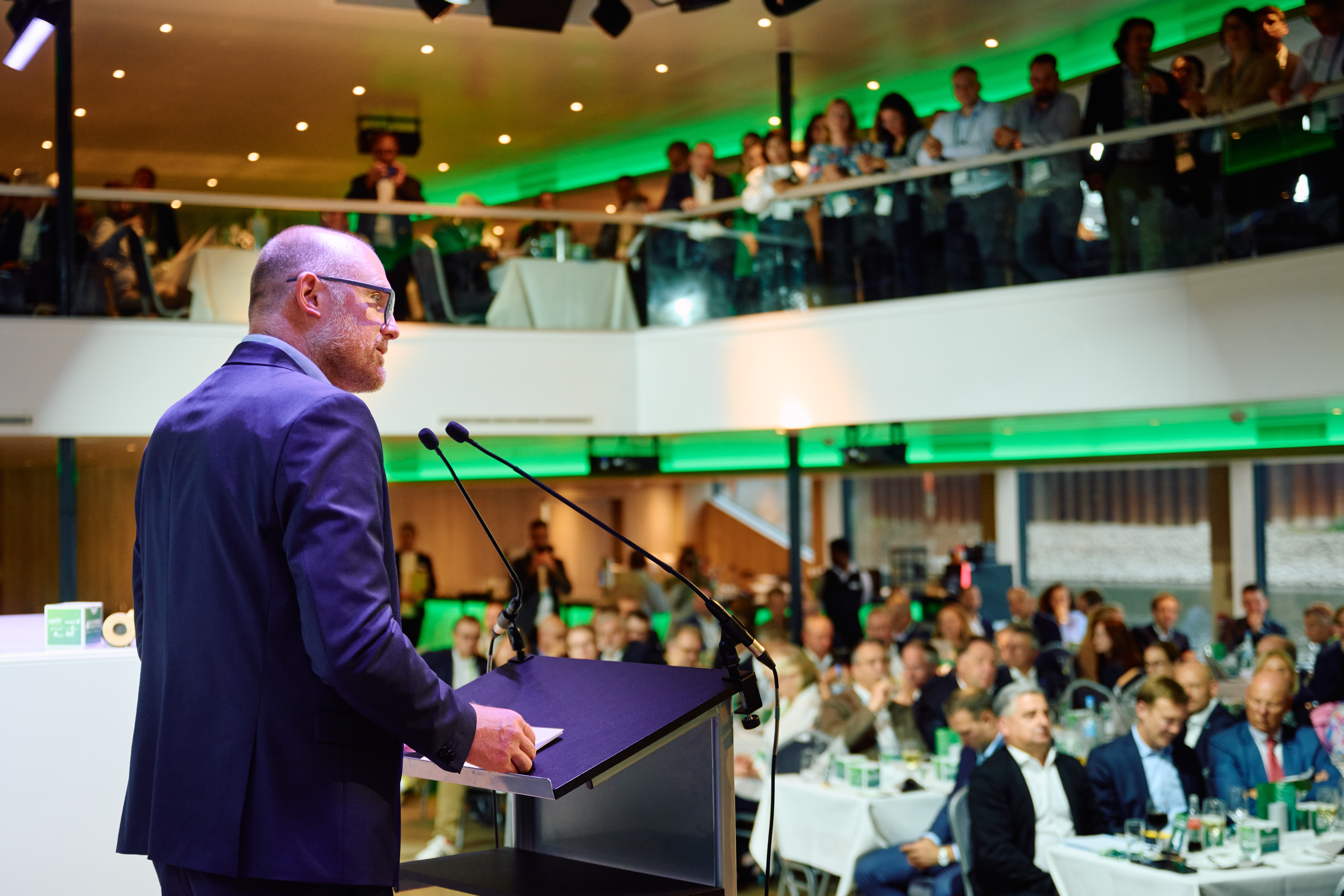
Duisburg/Bochum, September 2, 2025. With over 900 attendees:innen and 50 speakers:innen, the Hy.Summit.Rhein.Ruhr 2025 was completely sold out. The two-day conference set the tone for industrial policy, highlighted progress in infrastructure and regulation—and clearly and necessarily identified the hurdles to the hydrogen ramp-up.
At the opening gala in Duisburg, thyssenkrupp CEO Miguel López stated: “The challenges are great—but our determination as an industry to do our part is just as great. Only by working together with policymakers, academia, and the business community can we drive this transformation forward!” North Rhine-Westphalia Minister of Economic Affairs Mona Neubaur emphasized: “Hydrogen is a crucial building block for an industry that will remain competitive in the future. With strong companies along the Rhine and Ruhr and a well-trained workforce, North Rhine-Westphalia is a key hydrogen hub in the heart of Europe.”
Duisburg Mayor Sören Link emphasized: “Duisburg is in the midst of a transformation. We want to rethink industry: climate-friendly, innovative, and future-proof. Hydrogen plays an important role in this. The Hy.Summit shows that we are leading the way—for a strong economy, for future jobs, and for a region that wants to actively shape its future for the long term.”
On the second day of the conference in Bochum, the focus shifted to practical implementation. Infrastructure and regulation are making progress, but availability and price remain the decisive factors. Rasmus C. Beck, Managing Director of Duisburg Business & Innovation, said: “A topic that had generated a lot of excitement has now faced a harsh reality check.” The steel industry—and thus the hydrogen ramp-up—now needs clear industrial policy guidelines in Germany and Europe—from the Carbon Border Adjustment Mechanism (CBAM) and a longer allocation period for CO₂ allowances to competitive energy prices. Only a decarbonized steel industry can secure Europe’s hydrogen ramp-up and, with it, our industrial resilience.”
Markus Bangen, CEO of the Port of Duisburg, made it clear: “Pragmatic solutions are needed to get the market off the ground: Blue hydrogen and ammonia must also be permitted—otherwise, a climate-neutral industry in the Rhine-Ruhr region will remain a goal without a path to achieving it.”
At the conference in Bochum, hydrogen expert Dr. Philipp Steinberg, speaking on behalf of Duisburg Business & Innovation GmbH, presented three key demands as the “Last Chance for Our Steel” and the hydrogen ramp-up:
Define the steel industry as a strategic key sector of the hydrogen economy and provide it with targeted support.
Enhance the resilience of Germany and Europe through strategic alliances.
Ensure competitiveness and accelerate market ramp-up through proactive policy.
The Rhine-Ruhr region is already established as a testing and implementation hub for hydrogen, with research excellence, industrial transformation pathways, and a broad coalition of local governments. Despite the well-known hurdles, this transformation must now continue in collaboration with industry, policymakers, academia, and economic development agencies.
The next in-depth workshop, HY.Lab, will take place on February 19, 2026, in Hamm.
The Hy.Summit.Rhein.Ruhr 2025 is organized by the Hy.Region network.Rhein.Ruhr e.V., in cooperation with the economic development agencies of Bochum, Dortmund, Duisburg, Essen, and Hamm, and supported by a broad coalition of partners:innen. The organizers would like to thank all participants, speakers:innen, and partners:innen who made this event a success.
For more information:
www.hy-summit.de
www.hy-region-rhein-ruhr.de
www.duisburg-business.de
Please help yourself to our “Quote Bar” for the Hy.Summit 2025:
“Hydrogen is a crucial building block for an industry that will remain competitive in the future. That is why we remain committed to building a hydrogen economy and are doing everything in our power to support our industry on its path toward a climate-neutral future—through flagship projects in hydrogen production, transportation, and application. After all, hydrogen offers a major opportunity to make Europe less dependent on fossil fuel imports and thus more resilient. With strong companies along the Rhine and Ruhr and a well-trained workforce, North Rhine-Westphalia is a key hydrogen hub in the heart of Europe. The demand exists in North Rhine-Westphalia; now Berlin and Brussels must set the right course for the market’s further ramp-up—this is how we secure value creation, create well-paying jobs, and make our economy fit for the future.”
“The Hy.Summit.Rhein.Ruhr offers the ideal platform for making hydrogen tangible as a key technology for a climate-neutral industry. The challenges are great—but so is our determination as an industry to do our part. Only by working together with policymakers, scientists, and the business community can we drive this transformation forward!”
“Duisburg is in the midst of a transformation. We want to rethink industry: climate-friendly, innovative, and future-proof. Hydrogen plays an important role in this. The Hy.Summit shows that we are leading the way—for a strong economy, for future jobs, and for a region that wants to actively shape its future for the long term. Let’s seize this opportunity and show together what’s possible here.”
“Cutting-edge hydrogen research is taking place in Bochum. We are leveraging this excellence to further develop the technology and make it market-ready. This is a joint effort to build a resilient economy.”
“The Hy.Summit demonstrates how important it is to shape and drive the energy transition together—with strong partners from business, academia, and politics. After all, here in Hamm we’re seeing a great deal of interest, particularly among the business community, in the potential of hydrogen. That is why we are already taking concrete steps to implement this transformation in Hamm and setting the course for a climate-friendly energy sector of the future.”
“Without affordable hydrogen, climate-neutral and competitive steel production is unthinkable—it is key to a resilient industry of the future.”
“A topic that sparked euphoria has now faced a harsh reality check. We need to strike a balance: continuing the transformation while at the same time creating financial leeway for the industry. This requires clear industrial policy guidelines in Germany and Europe—ranging from the Carbon Border Adjustment Mechanism (CBAM) and a reliably extended allocation of CO₂ allowances to a stable market ramp-up for green steel and hydrogen. Only a decarbonized steel industry can ensure Europe’s hydrogen ramp-up and, with it, our industrial resilience.”
“Hydrogen is my element—and I’m excited to help advance this topic for our region through the Hy.Summit.”
“The Hy.Summit has established itself in the region as a professional conference on hydrogen. Above all, the event sends a clear message that we will think collectively in the future and work together to shape the future in many areas.”
"The Hy.Summit is not only important because of hydrogen as a future energy source for Germany, but it is even more important because resilience, energy, infrastructure, and defense will become major issues in the coming years."
“The Rhine-Ruhr region is at the heart of the energy transition. I am pleased that the Hy.Summit is once again creating a space for dialogue, resilience, and concrete hydrogen projects.”
“Pragmatic solutions are needed to get the market up and running: Blue hydrogen and ammonia must also be permitted—otherwise, a climate-neutral industry in the Rhine-Ruhr region will remain a goal without a path to achieving it.”
“As the Ruhr region, we’re better at navigating change than any other region. We’ll prove that once again as the hydrogen market takes off.”
“Our industry has always set the pace for climate-friendly innovations. From cogeneration using by-product gas to combined heat and power, we have established proven processes. With hydrogen, we are laying the foundation for innovations in the coming decades.”
“On the path to climate neutrality, hydrogen is and will remain one of the key technologies. What matters now is the successful development of local hydrogen ecosystems and committed pioneers. North Rhine-Westphalia, and the Rhine-Ruhr region in particular, offer the ideal starting conditions for this: successful pilot plants operated by major industrial companies, the first large-scale electrolysers now in operation, and the hydrogen backbone network currently under construction—all of which are built on the foundation that we are leading the way here in the expansion of renewable energy.”
“The Rhine-Ruhr region, more than almost any other, stands for industrial strength and constant change. Transformation is part of our DANN. Alongside risks, change always holds opportunities for innovative technologies, for better working conditions, and for a competitive economy that keeps pace with the times. Only if we actively shape this change together will technological progress also translate into progress for workers. This applies especially to the hydrogen economy.”
“Germany faces a location challenge. But we hold the solution in our own hands. This includes capitalizing on the opportunities presented by the energy transition. We want to make North Rhine-Westphalia Europe’s first climate-neutral industrial region—a model region for hydrogen throughout Europe. That’s how we’ll turn hydrogen into a success story. The Rhine-Ruhr region in particular—with its excellent universities, innovative research institutions, and high-performing companies—is an integral part of this success story.”